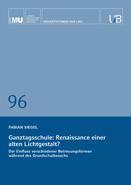
Ganztagsschule: Renaissance einer alten Lichtgestalt? Der Einfluss verschiedener Betreuungsformen während des Grundschulbesuchs
Synopsis
Ever since the widely noted results of the first PISA study, the German education system has been at the center of public debate. The repeatedly confirmed influence of family background on students’ performance is considered a key driver of education policy reforms and the nationwide expansion of all-day schooling. In the context of current modernization processes, all-day schools are increasingly regarded as a response to a wide range of societal challenges. Moreover, a historical perspective shows that this reform idea is by no means new. To date, however, it remains unclear whether all-day schools in Germany are living up to the high expectations placed upon them.
This study examines the landscape of all-day provision in primary schools and, in particular, the role of schools as institutions of socialization in their interaction with families. Drawing on data from the National Education Panel (NEPS), it analyzes various dimensions of primary school children’s individual development. The findings indicate that more nuanced perspectives are required and that no simple answer can be given as to whether the modern expansion of all-day schooling can truly be considered a renaissance of an older educational ideal.
Fabian Siegel studied educational sciences at the Ludwig Maximilian University of Munich, graduating in 2019. He subsequently worked as a research associate and earned his doctorate in 2025 with this dissertation. His research focuses on family-related educational inequalities and the transformation of the German education system, particularly in the areas of school development and early childhood education.
Downloads
Downloads
Published
Series
Categories
License
Copyright (c) 2026 Fabian Siegel

This work is licensed under a Creative Commons Attribution 4.0 International License.