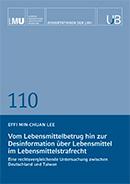
Vom Lebensmittelbetrug hin zur Desinformation über Lebensmittel im Lebensmittelstrafrecht: eine rechtsvergleichende Untersuchung zwischen Deutschland und Taiwan
Synopsis
How should food law respond to deceptive practices in the food sector? To what degree does food-related disinformation constitute a regulatory offence, and when should we treat it as a criminal offence? In light of globalized production and supply chains, deceptive practices in the food sector present growing challenges for criminal law. This comparative study illustrates how food fraud has transcended its traditional boundaries, increasingly including complex forms of food-related disinformation that may seriously undermine consumer confidence as well as the integrity of market and information systems.
Building on a functional comparative analysis of German and Taiwanese law, this study examines the distinct approaches to defining the limits of criminal liability for deceptive practices in food law. It argues for readjusting the scope of criminal law protection beyond public health, acknowledging consumer autonomy and the integrity of the food labeling system as vital interests worthy of criminal enforcement. In doing so, this study contributes to further developing the intersection of food law and criminal law from a global perspective.
Effi Min-Chuan Lee completed her law and politics degrees at National Cheng Kung University in Taiwan, where she graduated with a Master of Laws (LL.M.) and is a qualified attorney. She earned her doctorate degree in law at LMU Munich. Her research focuses on comparative criminal law and commercial criminal law specializing in food offences and digital technologies.
Downloads
Downloads
Published
Series
Categories
License
Copyright (c) 2026 Effi Min-Chuan Lee

This work is licensed under a Creative Commons Attribution 4.0 International License.